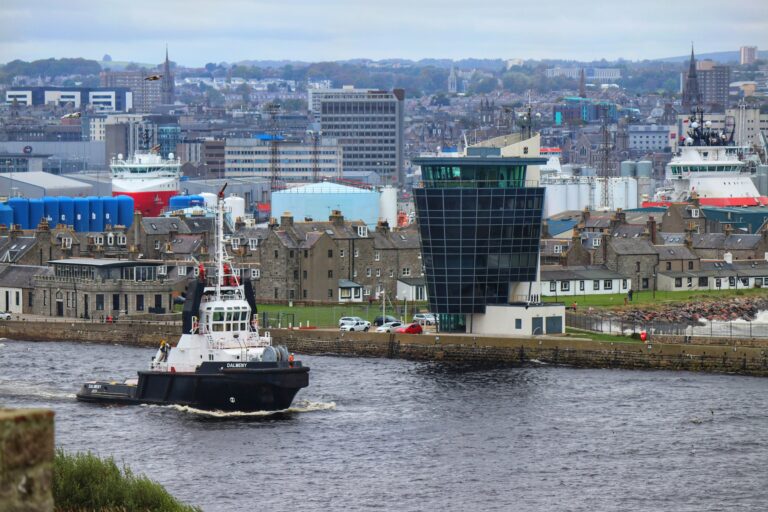
Construction of the £9.1m EnergyWorks facility in Aberdeen and a new TechX accelerator cohort of 11 cleantech start‑ups highlight how the Net Zero Technology Centre is trying to turn the North East into a net‑zero innovation and manufacturing hub.
EnergyWorks: a physical home for cleantech scale‑ups
Construction has begun on the £9.1 million EnergyWorks facility in Aberdeen’s Energy Transition Zone, billed as a Scotland‑first centre for developing and manufacturing green energy technologies. The 3,000 square metre building will provide industrial units, advanced manufacturing space and collaboration areas for firms working in sectors such as offshore wind, hydrogen and battery storage.
The project is backed by the UK Government, Scottish Government, Scottish Enterprise, bp and industry, with National Manufacturing Institute Scotland and the Net Zero Technology Centre as delivery partners. EnergyWorks is designed as a “one‑stop shop” for companies ready to move from prototype to production, with an ecosystem of mentoring and entrepreneurial support intended to help tenants grow and ultimately graduate into the wider regional economy.
Funding and jobs ambitions
UK Energy Minister Michael Shanks has marked the start of work on EnergyWorks, which is expected to be operational in early autumn 2025. UK Government funding of £5.5 million is being supplemented by £2 million from Scottish Enterprise, additional Scottish Government support and £1.25 million from bp, reflecting the project’s role in wider net‑zero industrial policy.
The facility aims to attract at least 15 tenants in its first year and to generate dozens of green energy jobs annually, with the building itself designed to run on 100% green electricity, partly supplied by on‑site solar. Use of sustainable construction materials and a focus on low‑carbon operations are intended to make the campus a demonstrator for the technologies it houses.
TechX 2025: eleven start‑ups, £500,000 in funding
Alongside the physical campus build, the Net Zero Technology Centre has selected 11 start‑ups for its 2025 TechX Clean Energy Accelerator, each receiving a share of £500,000 in grant funding linked to NZTC’s standard future‑equity agreement. The cohort covers technologies in low‑carbon hydrogen, carbon capture, renewable power and digital solutions, reflecting the breadth of the clean‑energy value chain.
Solar Power Portal reports that the winning companies include thermal energy specialists AED Energy and Global OTEC, hydrogen‑focused firms such as PEM Technologies, Protonera and Entropyst, carbon‑capture player Remedium Energy, and flow‑battery developer SoLead Energy. NZTC’s own announcement adds CGEN Engineering, EBB:Flow, Kondor and Plasma2x to the list, bringing the total to 11 companies in the 2025 cohort.
Pipeline from concept to manufacturing
NZTC’s TechX accelerator offers an intensive multi‑week programme of mentorship, technology development guidance and commercial support, followed by up to two years of growth assistance and access to its investor and operator network. The programme targets companies at technology readiness levels three to six, using grant funding and structured support to help them reach deployment‑ready stages.
For EnergyWorks, that pipeline matters because NZTC expects some TechX participants to become future tenants, bringing with them proven technologies in hydrogen, carbon capture, storage and novel power systems. By combining an accelerator programme with on‑the‑ground industrial space, NZTC and its partners are trying to anchor more of the clean‑energy supply chain in the North East rather than seeing promising start‑ups relocate for manufacturing.
North East’s net‑zero positioning
EnergyWorks is a flagship project within the wider Energy Transition Zone in Aberdeen, which aims to position the region as the “net zero capital of Europe”, a phrase used by ETZ and local partners to describe their ambition. The hub is intended to complement existing offshore and port infrastructure by providing a landing place for new technologies and companies that can feed into major projects in areas such as offshore wind, hydrogen production and grid‑scale storage.
For high‑growth firms and investors, the combination of dedicated manufacturing space, structured accelerator support and co‑ordination between government, industry and research institutions gives the North East a clearer proposition as a location to develop and scale clean‑energy technologies. The test will be how quickly the TechX cohort and their peers convert that environment into commercial deployments, revenues and jobs in Scotland over the next few years rather than elsewhere.