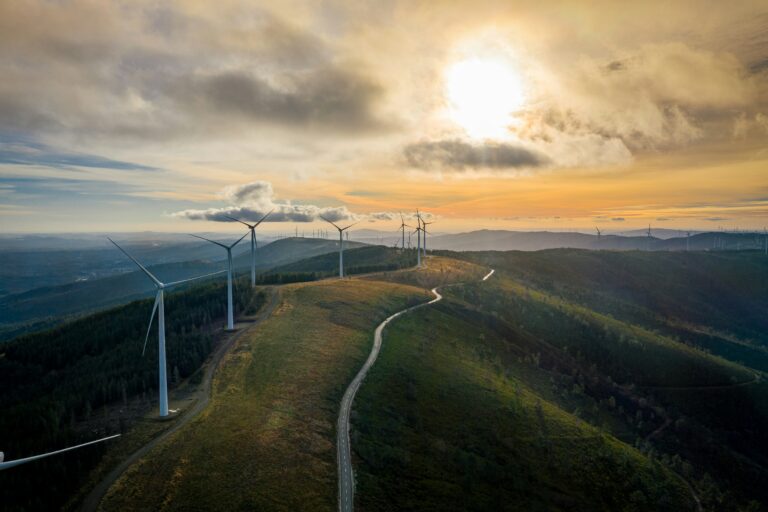
The Scottish Government has granted development consent and marine licences to Ocean Winds for its two‑gigawatt Caledonia offshore wind development in the outer Moray Firth, one of the largest projects awarded through the ScotWind leasing round.
The consent covers two adjoining projects, Caledonia North and Caledonia South, of approximately one gigawatt each, deploying up to 140 wind turbines across 429 square kilometres. The developer estimates the projects could generate enough electricity annually to power around two million households when fully operational.
Caledonia North sits approximately 28 kilometres from the Wick coastline and 48 kilometres from Banff, and will use up to 77 fixed‑bottom turbines. Caledonia South, further out at around 45 kilometres from Wick and 35 kilometres from Banff, will combine fixed‑bottom and floating foundations, with up to 78 turbines, of which no more than 39 will be floating.
Ocean Winds, a 50/50 joint venture between EDP Renewables and ENGIE, has committed to spending around £1.7 billion in Scotland if the development proceeds to construction. Taken together with its existing Moray East and Moray West projects, Caledonia is expected to take Ocean Winds’ long‑term operational workforce in the region to more than 200 skilled roles across engineering, operations and maintenance.
Caledonia is the second set of ScotWind projects to receive offshore consent from Scottish ministers. Ocean Winds already secured full onshore consent from Aberdeenshire Council in May, covering the cable corridor and substation connection to SSEN Transmission’s planned Greens substation, with onshore construction scheduled to begin in 2028.
Consent is not final approval to build. Ocean Winds must secure ministerial sign‑off on detailed environmental conditions, including a seabird compensation plan, and will need a Contract for Difference (CfD) in a future UK allocation round before reaching final investment decision. Offshore construction is expected to begin around 2030, subject to those approvals and commercial terms.
Mark Baxter, Caledonia project director, described the consent as “the culmination of years of hard work” and said the 2 GW project would “double the energy generation of the Moray Firth, supporting the UK’s aim of bolstering energy security, decarbonising the power system and transitioning jobs.”
Adam Morrison, UK country manager for Ocean Winds, welcomed the decision but warned that transmission charges remain the deciding factor for whether Caledonia proceeds to final investment. “If the UK is serious about energy security, it needs Scottish offshore wind. And if it wants Scottish offshore wind at the lowest cost to consumer, it must fix TNUoS,” he said, referring to Transmission Network Use of System charges — the annual fees generators pay for using the high‑voltage grid.